
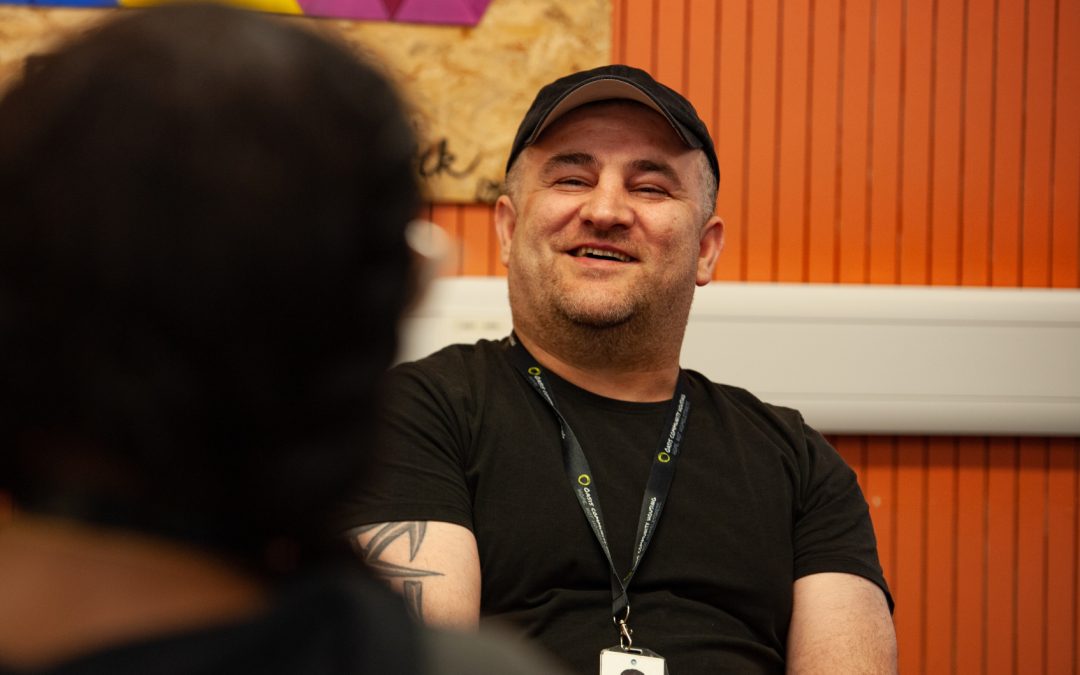
For many people, moving into a new home might seem like the end of homelessness. But for the Housing First approach, it’s just the beginning.
Oasis Community Housing’s Housing First approach was commissioned at the end of 2024. Our service provides long-term, person-centred support for people who have experienced homelessness and often face complex challenges, including poor mental health, substance use, physical health issues and social isolation.
Housing First focuses on helping people settle into permanent accommodation, while providing flexible support, tailored to their individual goals and needs.
A different approach to support
The service is built on seven core principles, explains Housing First Project Lead, Yad: “The top one is very simple: Everybody has the right to be housed.”
For Yad, a key misunderstanding around homelessness is the idea that it ends at the point someone is housed:
“There’s always a belief that when people who are street-homeless or sleeping rough are housed, that means the end of homelessness. For us, that’s where the process of ending homelessness begins.”
Unlike traditional homelessness support services, where the support is often tied to a tenancy, support via Housing First continues even if the housing agreement breaks down.
Housing First teams continue to work with people to help them secure and sustain stable housing, without requiring people to meet ‘housing readiness’ criteria before being offered accommodation.
Trust is the foundation for working together, as Yad explains: “There’s no precondition for individuals to engage with us. This is what makes it more successful.”
The support is practical and ongoing, and the level of engagement is up to the individual. For people with complex needs, this can mean the difference between keeping a stable home and returning to homelessness.
Support in practice
Day-to-day support is flexible and built around consistency, trust, and meeting people where they are. Yad continues:
“Basically, in a friendly approach, we just talk to them. We tell them, ‘We are here for you. Despite what’s happening, we’re still going to support you for as long as you need support.’
“Our team is out daily to meet with individuals and support them to get to appointments and carry out day-to-day activities.
“We also focus on wellbeing activities, taking people to places like museums and galleries to help them connect with the community and feel a sense of normality.
“Housing First is mainly about trying to empower people; ‘This is about you, not about us. You have to lead your support. I’m here to be a part of that.’”
Oasis Community Housing’s Housing First team supports more than 20 individuals across the North East.